Gen-tie line length and why it moves a BESS project's economics
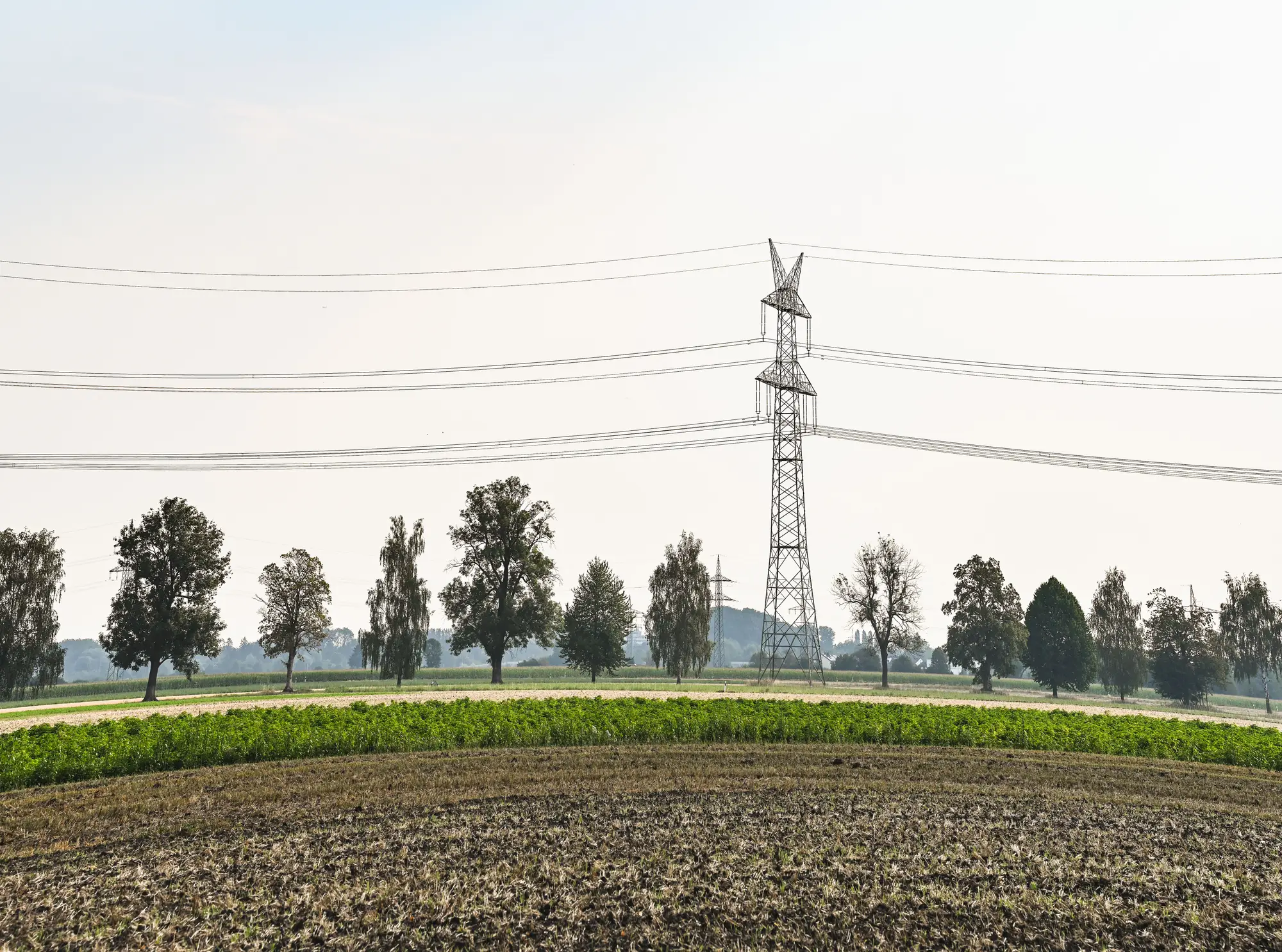
A parcel can have flat grading, clean title, and three-phase road access and still lose to a worse-looking field a mile closer to the substation. The reason is almost always the gen-tie. Line length doesn't scale linearly with distance once you cross certain thresholds, and a project that looked like a clean IRR on the first pass can slip two or three points once the route gets surveyed.
What drives gen-tie cost per mile
The per-mile number isn't fixed. It moves with voltage class, right-of-way acquisition, terrain, and whether the route crosses wetlands, waterways, or someone else's easement. A straight shot across open ag land with willing landowners is a different build than a route that has to jog around a floodplain or negotiate a crossing with another utility's existing corridor. Developers who've scoped a few of these know the quote from the EPC contractor always comes back higher than the back-of-envelope number, because the back-of-envelope number assumes a straight line and the real route never is one.
Voltage matters too. The interconnection study can push a project toward a higher voltage tie to clear thermal limits, and that resets structure spacing, clearance requirements, and the whole cost base, well beyond the wire itself.
How far can a BESS gen-tie run
There's no fixed mileage cap. The real constraint is where the line length starts eating the spread between the project's expected revenue and its all-in cost basis. For a BESS project, that math is tighter than it is for generation, because storage doesn't have a fuel cost offset to absorb a longer tie. A solar-plus-storage project might tolerate a longer gen-tie because the energy production carries more of the revenue stack. A standalone BESS asset is leaning almost entirely on capacity payments and arbitrage spread, so every added mile of line is a direct subtraction from a thinner margin.
In practice, most developers start getting nervous past a mile or two of new build, and the nervousness compounds if the route needs easements from more than one landowner. Every additional parcel in the corridor is another negotiation, another title search, another chance the deal stalls at the signature stage rather than the engineering stage.
Why this shows up before the site walk, not during it
The frustrating part is that line length is knowable before anyone drives out. The substation's location is fixed. The parcel boundaries are fixed. What usually isn't done early enough is lining those two facts up against buildable acreage, road frontage, and grading, because that work has historically meant an analyst opening an aerial viewer and clicking through parcel after parcel by hand. By the time someone catches that the "good" site is three miles from the tap and the parcel next door is a half mile and just as flat, a site walk may already be booked on the wrong field.
A shortlist tool built around this screening step looks at the land within reach of a substation's spare capacity for the traits that determine whether a gen-tie stays short: flat ground, a parcel small enough to permit without a drawn-out process, and existing road access. It replaces the hours an analyst spends ruling parcels in or out by eye, ahead of the interconnection study and the EPC's route engineering that still have to happen afterward. The shortlist that reaches the site walk ends up biased toward the short, cheap gen-tie, instead of the long one that looked fine on a map and wrong on a cost estimate.
The short version
Gen-tie length is one of the few line items in a BESS pro forma that can single-handedly flip a project from bankable to marginal, and it's almost entirely determined before the first boot hits the ground. The parcels worth walking are the ones that were already close to the tap and already buildable, not the ones that got picked because they were the first result in an imagery search.
If gen-tie distance keeps turning up as the thing that breaks your shortlist late, it's worth screening for it earlier instead of later.