Distribution vs. transmission substation: reading the difference from overhead
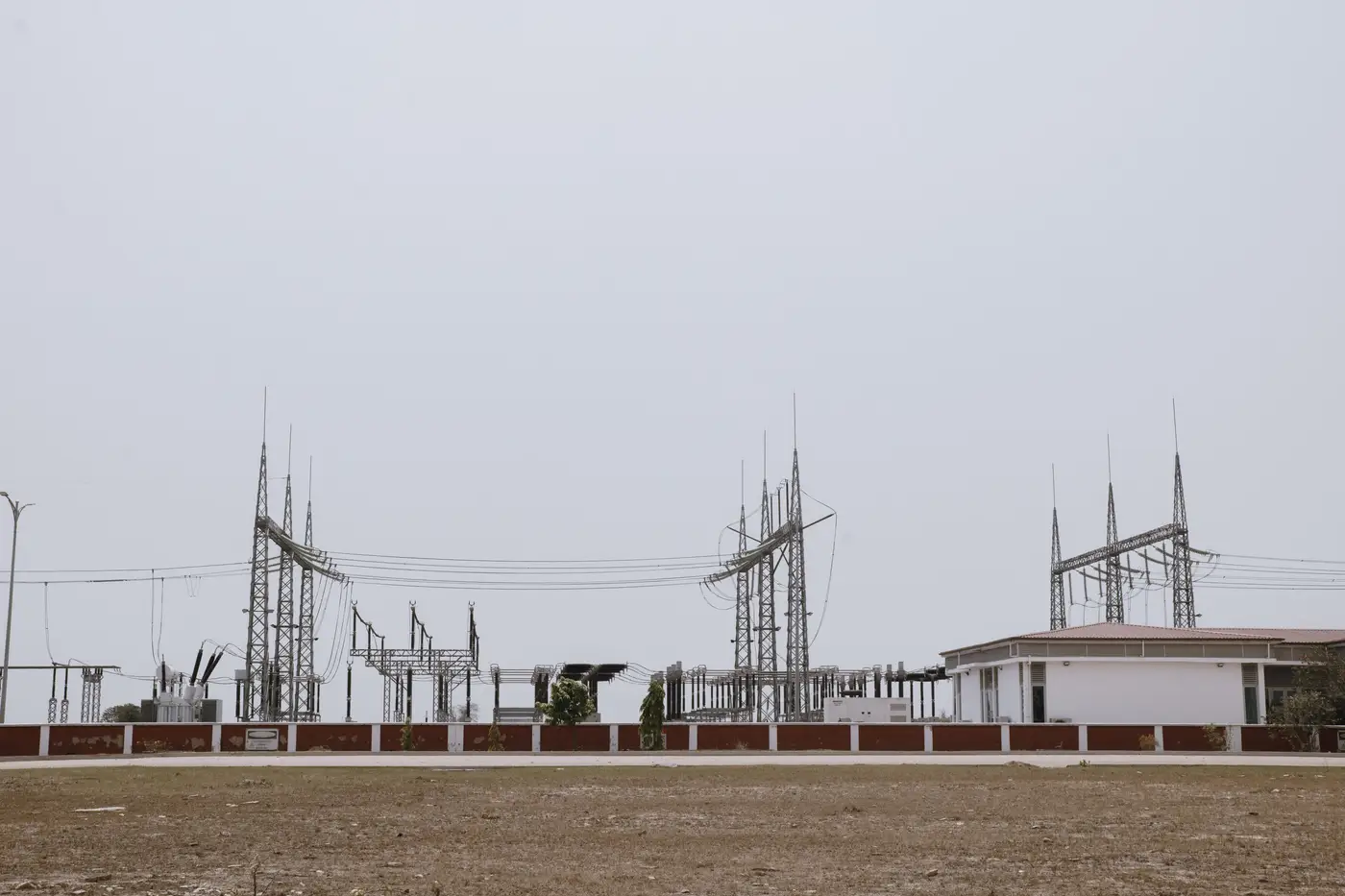
Before you drive out to a substation, you can usually tell from an aerial pass whether it's worth the trip. A lot of early-stage screening dies on this one question: is this a distribution substation stepping power down for homes and businesses, or a transmission substation with the bus capacity and voltage class a utility-scale BESS interconnection needs. Get the two confused and you'll spend a site visit on a yard that was never going to take more than a few megawatts.
What separates the two in the imagery
Start with the switchyard footprint. Distribution substations are small, often under an acre, tucked behind chain-link in the middle of a subdivision or along a commercial corridor. Transmission substations sprawl. You're looking at several acres minimum, sometimes twenty or more, because the bus work and clearance requirements at 115 kV and up just take more room than a 12 kV or 25 kV distribution yard.
Then look at what's feeding the yard. Distribution substations are fed by one or two transmission lines coming in, running out through dozens of smaller distribution feeders you can trace along residential streets, often on wood poles. Transmission substations show multiple high-voltage lines on steel lattice towers or tall steel monopoles converging from different directions, usually running in a straight, cleared right-of-way corridor you can follow for miles on the image. If you count the incoming lines and see three or more heavy corridors meeting at one yard, that's a strong transmission signal.
Insulator strings are another tell once you zoom in. Longer strings of insulator discs mean higher voltage. A distribution line running into a small substation will show short insulator strings and no visible strain structures. A transmission yard will show long strings, dead-end strain towers at the yard boundary, and sometimes a visible switching structure or ring bus layout where lines cross and tie into multiple bays instead of one simple inbound-outbound pair.
Transformer bank size and count matter too. Distribution yards typically run one or two transformers of modest size with a simple radial layout. Transmission substations usually carry multiple large transformer banks, sometimes with spare bays left open for exactly the kind of interconnection a storage developer is hoping to find, plus more visible breaker and bus structure between the incoming lines and the transformers.
Why the voltage class matters for siting
This isn't an academic distinction. A BESS project pulling meaningful megawatts needs to tie into transmission-class infrastructure, or at minimum a distribution substation with an unusually large upstream feed, because that's where the headroom lives. A parcel next to a tidy little distribution substation serving a neighborhood might be close to a substation in the literal sense, but it's not close to spare capacity. Developers who skip this check end up running interconnection studies on parcels that were disqualified the moment someone looked at the yard carefully.
The imagery clues above get you to a reasonable guess about voltage class from a desk, before anyone calls the utility or pulls a queue map. Combine corridor count, yard footprint, and insulator string length and you can usually sort "transmission, worth a closer look" from "distribution, not worth the drive" without opening a single interconnection document. It won't tell you what capacity is actually available on that bus. For that you still need the utility's data. But it filters out the substations that were never in the running.
That filtering only solves half the problem. Once you've confirmed a substation looks like transmission class, the next question is whether the land around it looks buildable: flat enough, small enough to permit without a long environmental review, and already sitting on a road. Battery Storage Siting turns that second screening pass into a shortlist of parcels near a substation's spare capacity, instead of another aerial viewer tab you have to work parcel by parcel.
If you're already eyeballing switchyards to guess voltage class, it might be faster to let the shortlist come to you.