Point of interconnection vs. substation fence line: what's the difference
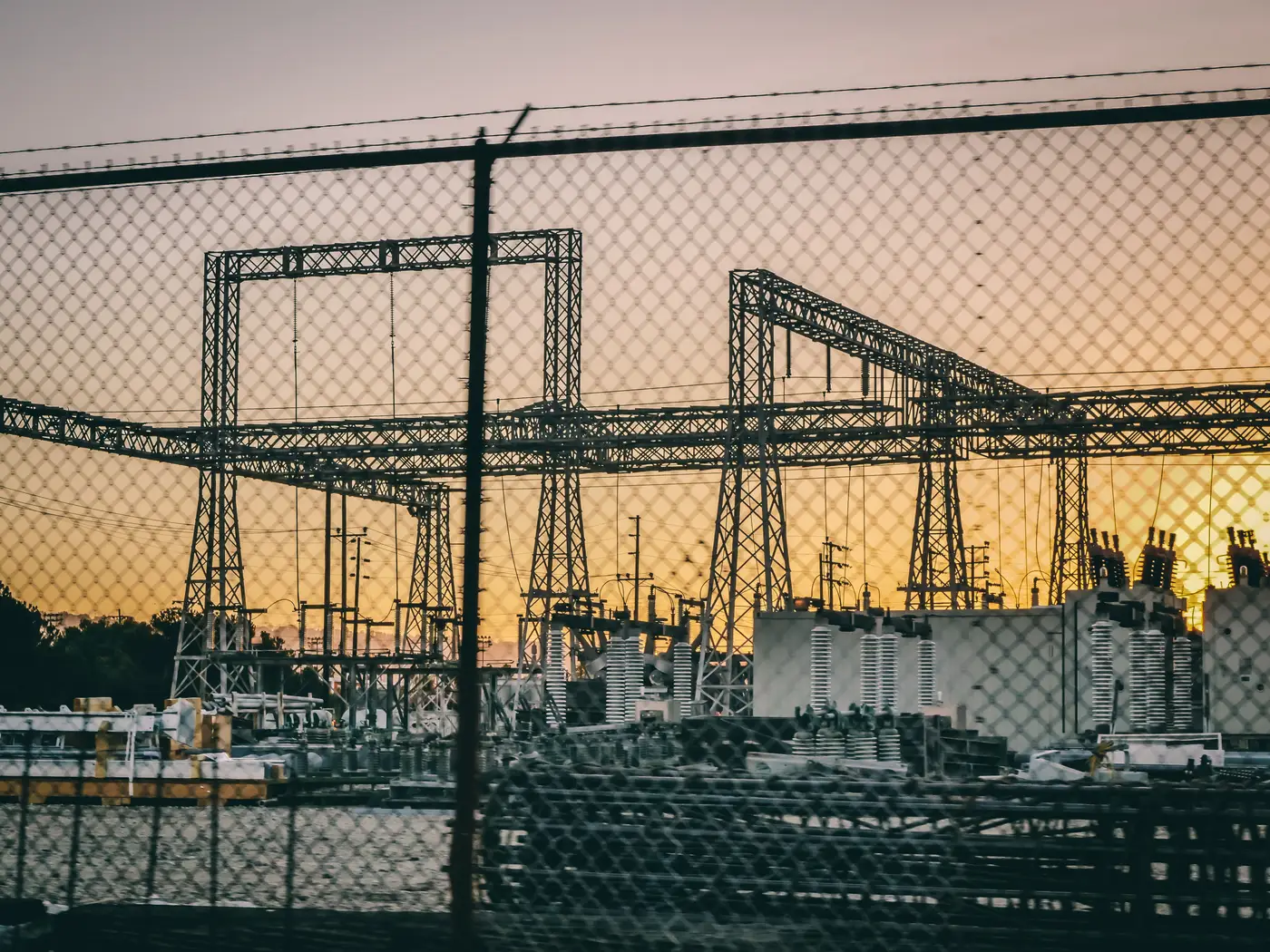
A developer sends over a parcel and says it's "right at the substation." Then the interconnection study comes back and the point of interconnection sits somewhere else on the property, past a transmission corridor, across a creek, or on the far side of a breaker bay you didn't know existed. The parcel didn't move. The assumption did.
The fence line and the POI are two different things, and conflating them is one of the quieter ways a site walk gets booked on a parcel that was never going to pencil.
What the fence line tells you
The substation fence line is the physical perimeter of the yard: the transformers, breakers, switchgear, and the chain-link around it. When someone says a parcel is "adjacent to the substation," they usually mean the parcel touches or sits close to that fence.
That's a real data point. Proximity to the yard matters for gen-tie length, and gen-tie length is a line item that shows up in every pro forma. But the fence line tells you nothing about where the utility will actually let you connect, or whether there's spare capacity to connect to in the first place. A parcel can hug the fence and still be a bad interconnection candidate if the feeder serving that bay is already loaded, or if the utility's standard practice routes new generation to a specific bus on the far corner of the station.
What the POI is
The point of interconnection is the specific electrical point, usually a bus, breaker position, or tap, where your project's gen-tie physically ties into the grid. It's assigned (or proposed) through the interconnection study process, not by eyeballing which parcel is closest to the yard.
The POI can be:
- Inside the substation itself, at a spare bay or an expandable bus position
- At a tap point on a transmission or distribution line some distance from the yard
- At a new switching station the utility requires you to build, which moves the effective connection point entirely
None of that is visible from a parcel boundary or an aerial image of the fence line. It comes out of the queue study, and it's often not finalized until well into the interconnection process, which means early-stage screening has to work with the substation's documented spare capacity and reasonable assumptions about where that capacity is accessible, not a confirmed POI.
Why the gap matters for gen-tie routing
The distance between the fence line and the actual POI is the distance your gen-tie has to cover beyond what a quick look at the map suggests. A parcel that reads as "0.2 miles from the substation" can turn into a half-mile of gen-tie routing once the POI lands on a bus at the opposite end of the yard, or on a transmission tap that requires crossing a neighboring parcel you don't control.
That gap also interacts with the stuff that makes land buildable in the first place. A flat, road-served parcel next to the fence is only a good candidate if the routing from that parcel to the real POI doesn't run through wetlands, cross a parcel you'd need an easement for, or require condemning a right-of-way. Screening on fence-line proximity alone skips that question entirely.
What to check before a site walk gets scheduled
Before anyone drives out to a parcel on the strength of "it's next to the substation," it's worth confirming three things: what spare capacity exists at that station, where on the station that capacity sits relative to the parcel, and whether the land between the parcel and that point is clear of the obstacles that turn a short gen-tie into a long one. None of that requires a finalized interconnection study. It does require treating the fence line as a starting point for the capacity and routing question, something a parcel screen can answer long before a crew drives out.
That's the gap Battery Storage Siting is built to narrow: screening the land within reach of a substation's documented spare capacity for the traits that keep a gen-tie short and a parcel buildable, before a field team spends a day confirming what a map should have ruled out.
If "near the substation" is the only qualifier a parcel has passed so far, it's worth a second look before it goes on the site walk list.